
Locally owned in East Orlando · Now serving Lake Nona & Dowden Road
Weekly Pool Service in East Orlando
Clean water, balanced chemistry and a photo report after every visit. One flat monthly price, no contract.

5.0 stars on Google
BBB Accredited Business
Photo report
after every visit
Month to month
no contract to sign
Background-checked
technicians
Services
Pool Cleaning Services in East Orlando
Four things, done well. Pick the one you need or ask and we will point you to the right one.
Weekly Pool Service
Skim, brush, vacuum, empty the baskets, balance the water, check the equipment. Same day every week. From $100 a month, standard chemicals included.
Green to Clean
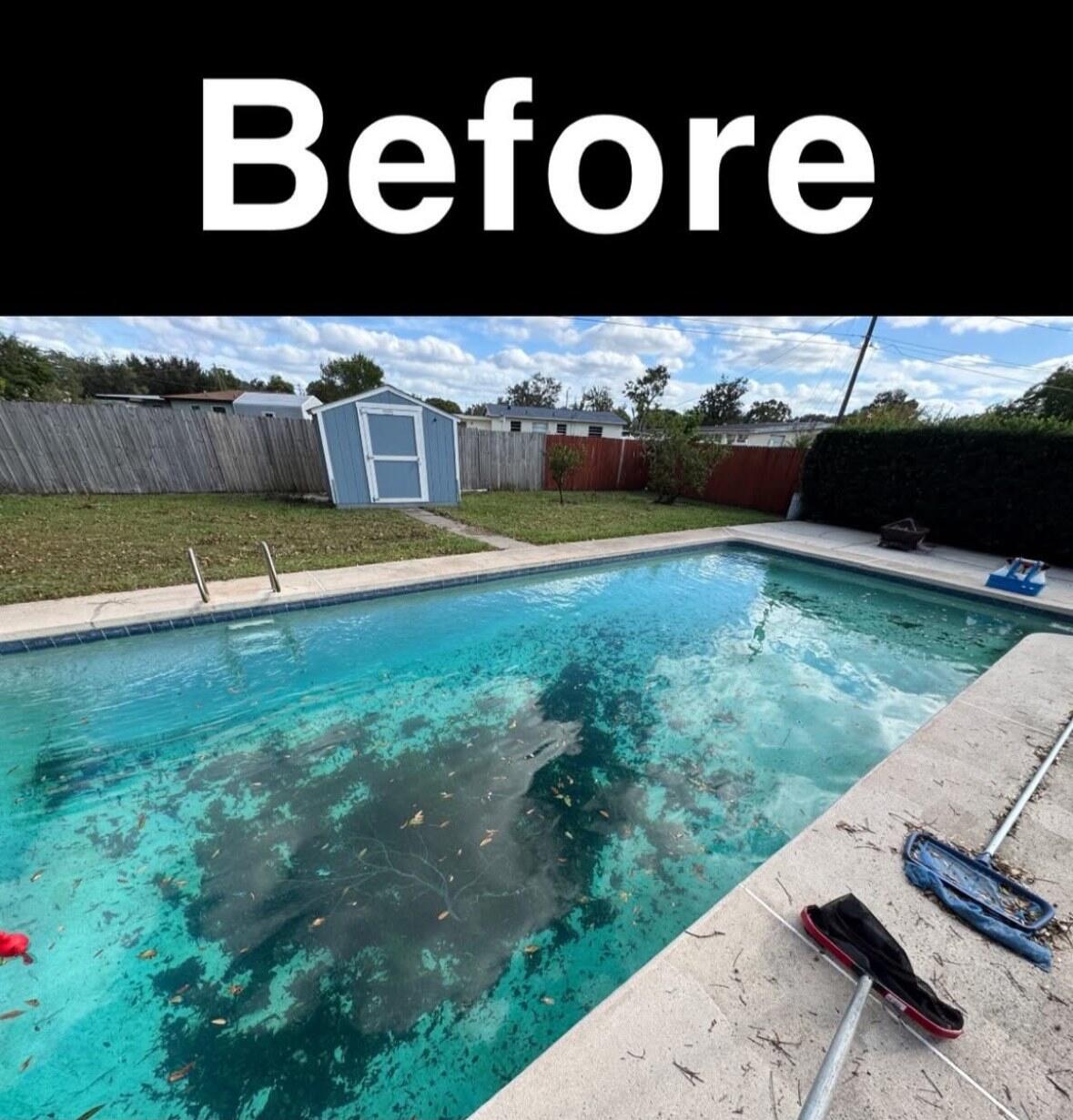
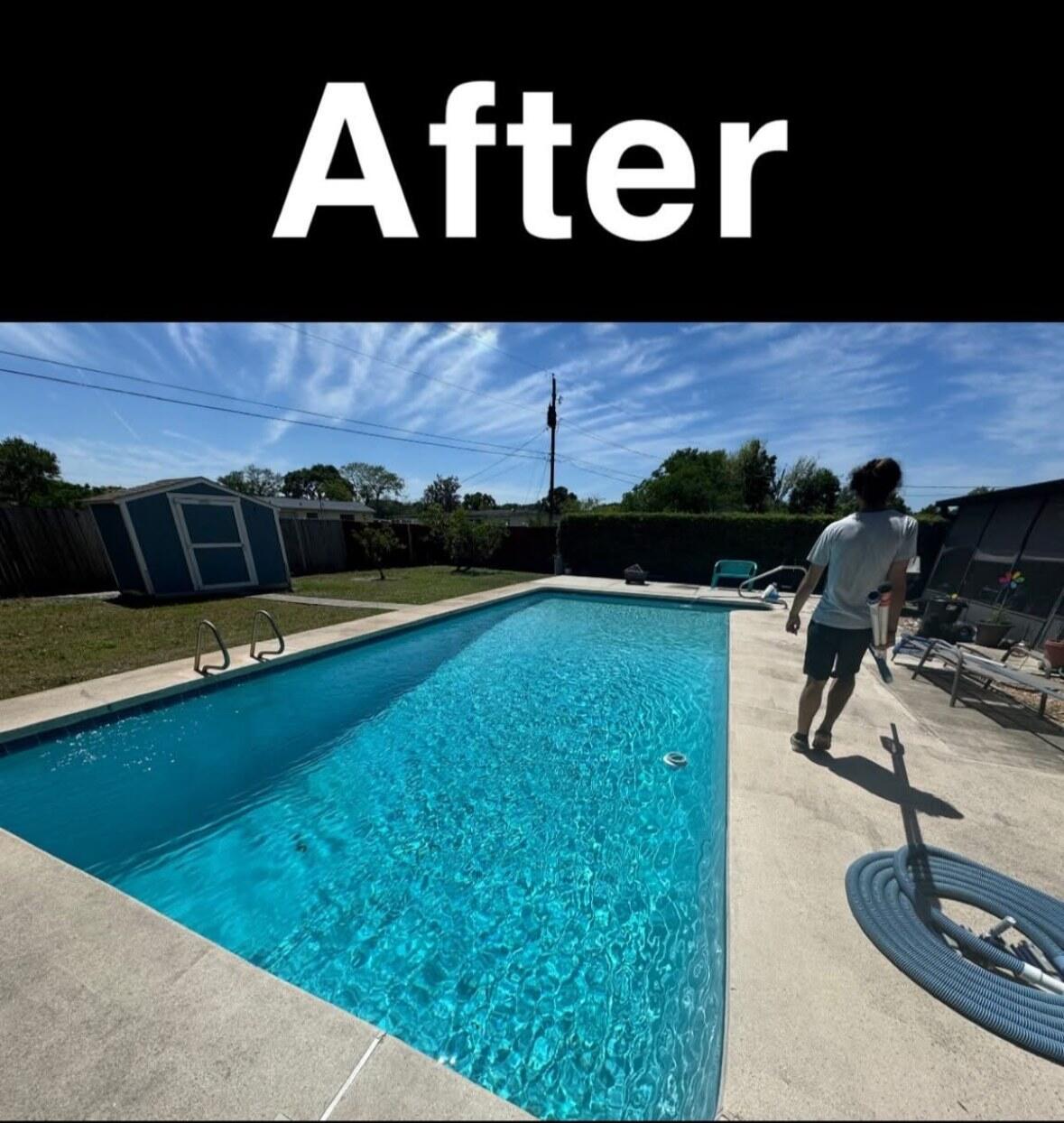
Green or black pool? We shock, brush and filter it back to clear. Usually a few visits. Almost every pool is recoverable.
One-Time Cleaning
Party this weekend? Just moved in? One thorough clean and a full chemistry balance, no commitment.
Equipment Check
Noisy pump, cloudy water, salt cell errors. I'll find out what's wrong, send you a written report, and point you to a licensed repair pro if it needs one.
Why Us
What You Get With Elemental Pools
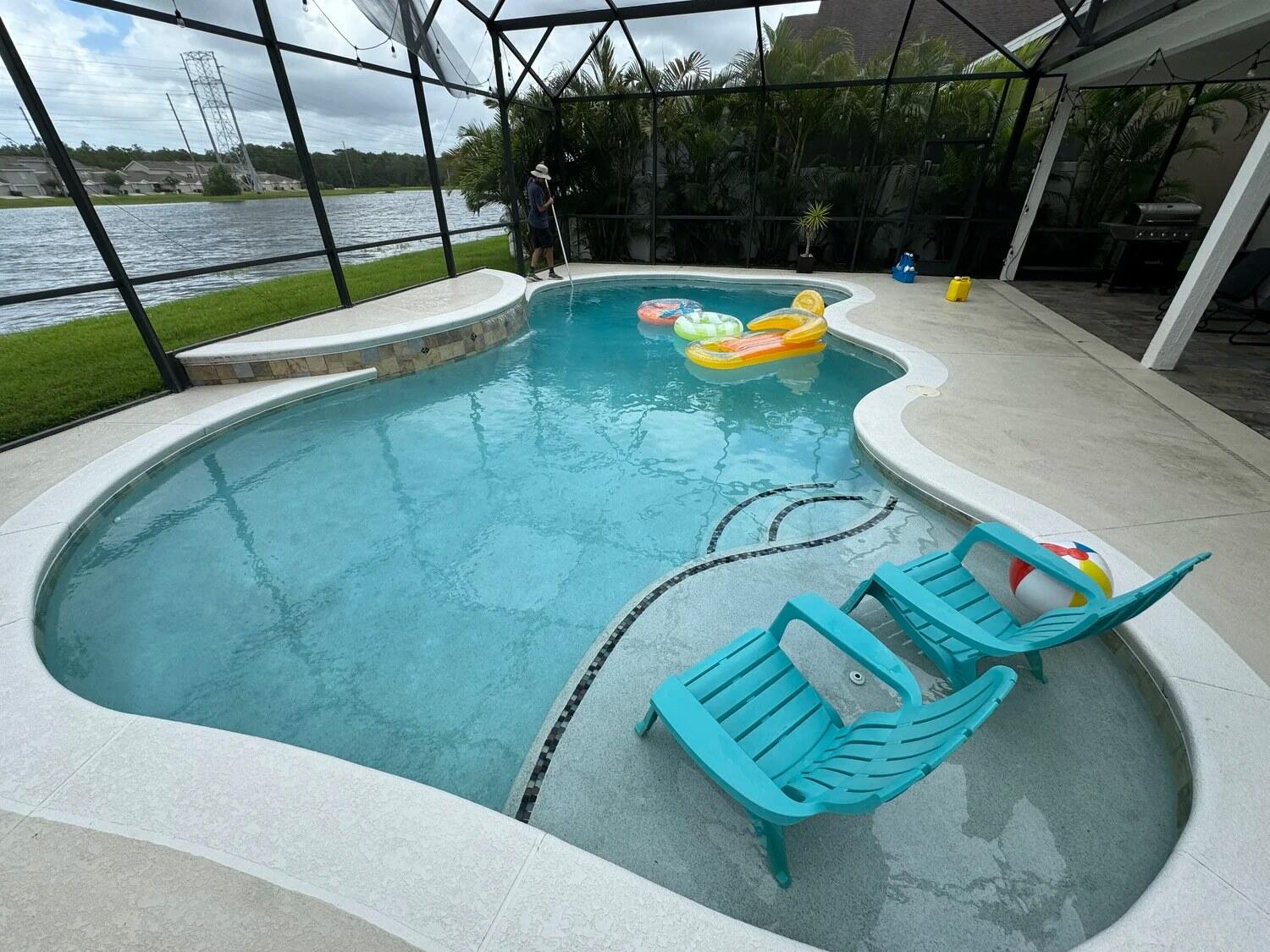
You see every visit. Before and after photos, chemical readings and what we added, emailed after each stop.
One flat price. Your monthly rate covers labor and standard chemicals. Anything over $10 extra gets your OK first.
Owner-run and local. I live in East Orlando and I am on the route myself. No call center, no rotating crew.
Visit Reports
Stop Guessing. Start Knowing.
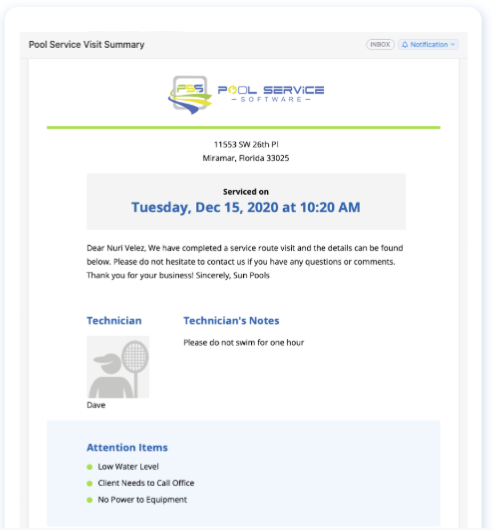
After every visit you get an email with before and after photos, the chemical readings, what we added and anything that needs attention. It is your proof the work got done, even when you are not home.
Reports powered by Pool Service Software.
Service Area
Serving East Orlando
We clean pools in Alafaya, Avalon Park, Waterford Lakes, Eastwood, Rio Pinar, Azalea Park, around UCF and Valencia East, and Lake Nona including the Dowden Road area (Randal Park, Storey Park, Moss Park). Zip codes 32828, 32825, 32822, 32817, 32807, 32815, 32826, 32829, 32827 and 32832.
Now serving Lake Nona and Dowden Road. In 32828 or 32817? You get $10 off monthly service. Not sure if you are in range? Text your address to (321) 351-5841.

Pricing
Instant Pool Service Quote
Pick your service, slide to your pool size, see your price. No email required.
The price you see is the price you pay for routine service. Specialty treatments are quoted separately, and always before the work.
About
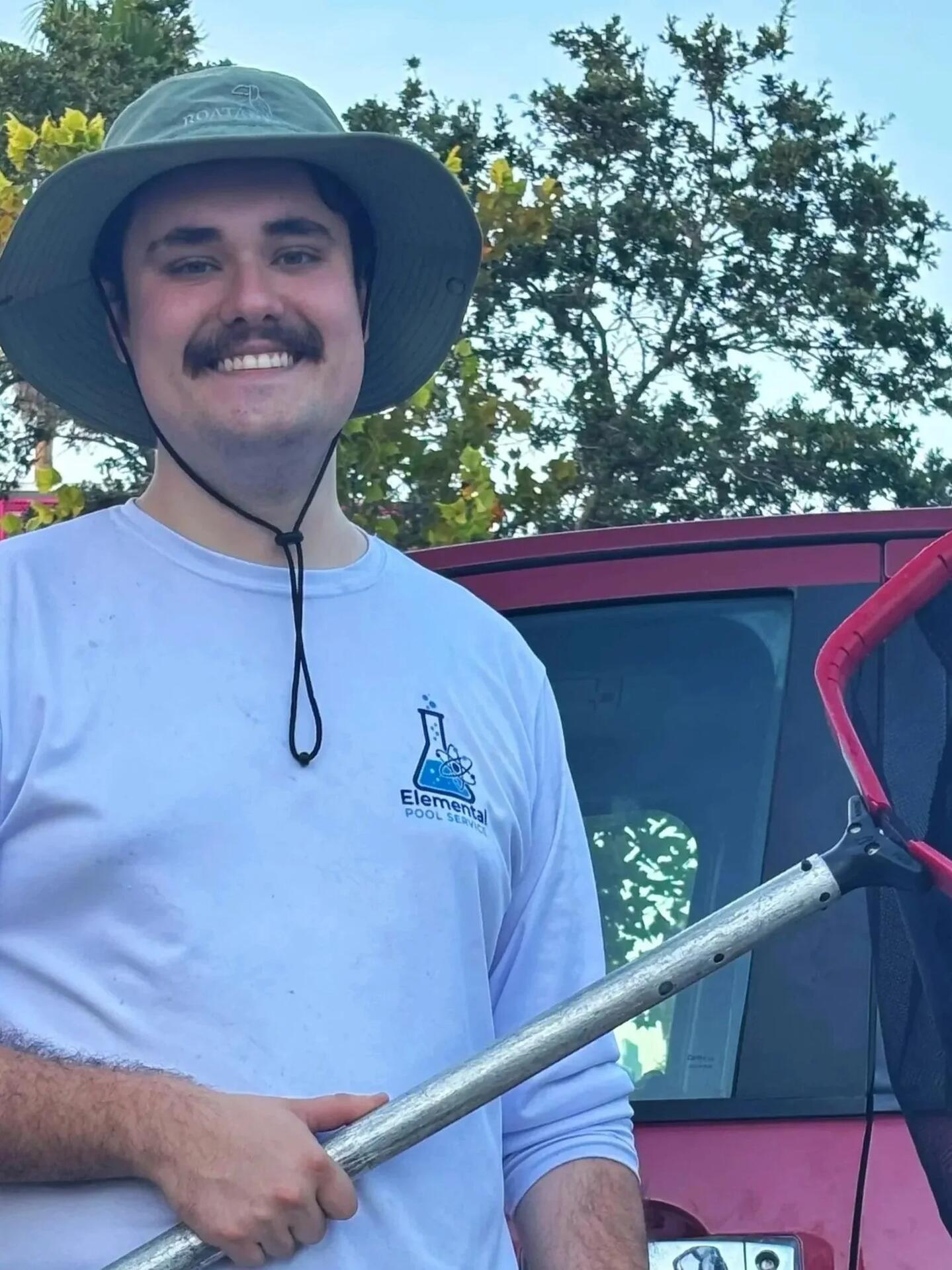
Hi, I'm Jason.
I got into water chemistry through aquariums, then managed a pool store and watched a lot of companies sell homeowners chemicals and repairs they did not need.
I trained under experienced techs and started Elemental Pools to do it differently: show up when I say I will, keep your water right, and show you exactly what I did.
If you want a pool guy who texts you back, let's talk.
FAQ
Pool Service Questions, Answered
Email [email protected] or text (321) 351-5841 if yours is not here. Longer answers live in Pool Care Advice.
What is included in weekly pool service?
Every visit: skim the surface, brush the walls and steps, vacuum, empty the skimmer and pump baskets, test and balance the water, and check the pump, filter and salt system. Filter and salt cell cleanings are included as needed. You get a photo report when we're done.
How much does pool service cost in East Orlando?
Weekly service runs $100 to $200 a month depending on pool size and whether the pool is screened. Standard balancing chemicals are included. The quote calculator on this site gives your exact price in about a minute.
Do I have to sign a contract?
No. Service is month to month. Cancel any time with 30 days' notice.
Do I need to be home for the service?
No. Leave the gate unlocked on your service day and keep pets inside or friendly. We lock the gate behind us. Every technician is background checked.
My pool is green. Can you fix it?
Yes. A green pool is an algae bloom, and almost every one is recoverable. It takes a few visits of shocking, brushing and filtering. Text us a photo and we'll quote it.
What costs extra?
Specialty treatments (heavy algae, phosphates, stains), off-schedule visits, and deep cleans of sand, D.E. or multi-cartridge filters. Small extras up to $10 a month, like an extra dose of a specialty chemical, go on your next invoice. Anything above that, we ask first.
What happens when it rains?
Light rain, full service. Lightning or heavy rain, we do a "no-pole" visit: test and balance the water, empty the baskets, clean the filter if needed. Rain throws off chemistry, so skipping is not an option. Your report says exactly what was done.
Are the chemicals safe for kids and pets?
Yes, once they are in the pool and diluted. The hazard is the concentrated product, and we take that with us, so it is never stored at your house. If the pool is not safe to swim for any reason, your report will say so.
How does billing work?
Invoice on the 1st or at month end, your choice. Pay by card (Stripe), Zelle, cash or check. Autopay is available.
Do you come every single week?
Service runs on a 48-week year: four planned off weeks for holidays, scheduled in advance and announced 2 to 4 weeks ahead. We balance the pool extra carefully before each one.
How long should I run my pool pump?
Rule of thumb for Central Florida: one hour per 10°F of average daily temperature, so about 8 hours when it is 80°F out. Your pool may need a little more or less.
What areas do you cover?
East Orlando: Alafaya, Avalon Park, Waterford Lakes, Eastwood, Rio Pinar, Azalea Park, around UCF and Valencia East, and Lake Nona including the Dowden Road area (Randal Park, Storey Park, Moss Park). Zip codes 32828, 32825, 32822, 32817, 32807, 32815, 32826, 32829, 32827 and 32832.
Do you service Lake Nona?
Yes. We cover Lake Nona and the Dowden Road corridor, including Randal Park, Storey Park and Moss Park (zip codes 32827 and 32832). Same weekly service, same flat pricing, same photo report after every visit.
Contact
Request Pool Service
Fill this out or text (321) 351-5841. Name and phone are all I need; I will sort out the rest by text.
Pool Care Advice
Straight Answers About Pool Care in Central Florida
Short, practical notes from the route, written for East Orlando pools: screened lanais, afternoon storms, hard water and a lot of sun.
Basics
Why is my pool green after rain
Rain knocks out chlorine three ways at once. Here is what happens and the order to fix it.
How long to run your pool pump in Florida
The rule of thumb, what it costs on your power bill, and when a variable-speed pump pays for itself.
Salt pool vs chlorine pool in Florida
A salt pool is still a chlorine pool. What changes is who makes the chlorine, and what that costs over time.
Screened vs unscreened pools
Yes, measurably. Here is why screened pools in East Orlando use less chlorine and why they cost less to service.
Hurricane prep for your pool
What to do before the storm, and the one thing you should never do.
Pool chemistry numbers explained
Free chlorine, pH, alkalinity, calcium, stabilizer and salt: the ranges we aim for and why each one matters.
Problems
Cloudy pool water
Chemistry, filtration, circulation, or stuff in the water. One quick test narrows it down.
Yellow (mustard) algae
If you keep finding a yellow dust on the shady wall, this is it, and normal chlorine levels will not kill it.
High stabilizer ("chlorine lock")
Too much cyanuric acid makes chlorine useless. It builds up from tablets, and the only fix is fresh water.
Pool stains explained
Brown, green, grey or white marks on plaster, and the vitamin C test that tells you what you are dealing with.
Is my pool leaking
Orlando pools lose a quarter inch a day to the sun in summer. Here is how to tell normal from a leak, in 24 hours.
Pump won't prime
Five things you can check at the equipment pad in ten minutes, and the two that mean stop and call.
Pollen and oak season
The yellow film, the brown tassels, and why skimmers alone will not keep up.
Salt cell errors
The three errors every salt owner eventually sees, and which one you can fix yourself.
Storms
Hurricane prep for your pool
What to do before the storm, and the one thing you should never do.
Hurricane season pool checklist
What to do in June so the first named storm is not a scramble.
Pool flooded or overflowed after a storm
Dirty water, high level, maybe a flooded equipment pad. The order to deal with it.
Holidays and seasons
Pool party prep
A timeline for Memorial Day, the Fourth, Labor Day, birthdays, or Thanksgiving with the cousins.
Winter pool care in Orlando
You do not close a pool here, but the routine does change. Pump hours, chlorine, leaves, and the freeze nights.
Holiday off weeks explained
Four planned weeks a year with no visit. What we do before, and what you can do during.
New to weekly service? See what it costs in under a minute, or text (321) 351-5841.
Pool Care Advice
Why Is My Pool Green After It Rains?
Every summer in Orlando I get the same text after a week of afternoon storms: "It was fine on Sunday, now it's green." Rain does three things to a pool at the same time, and together they are enough to start an algae bloom in a couple of days.
What the rain does
It dilutes your chlorine. An inch of rain on a 12,000 gallon pool adds hundreds of gallons of water with zero sanitizer in it. Your chlorine level drops just when you need it.
It drops your pH and alkalinity. Florida rain is slightly acidic. Low pH is not the problem by itself, but swinging chemistry stresses everything else.
It washes food into the pool. Runoff from the deck, lanai and yard carries phosphates, nitrates, dirt and pollen. That is fertilizer, and the water is 85 degrees. Algae spores that are always present finally get what they need.
How to fix it, in order
1. Skim and empty the baskets so the pump can move water.
2. Brush the walls, steps and corners. Algae holds on to surfaces; chlorine cannot reach what the brush does not loosen.
3. Test the water. If you only test one thing, test free chlorine.
4. Shock the pool, meaning raise chlorine well above normal. For a light green pool that is usually two to three times the normal dose. For a swamp, more, over several days.
5. Run the pump 24 hours a day until the water is clear, and clean the filter when the pressure climbs 8 to 10 PSI above its clean reading.
6. Once it is clear, bring pH and alkalinity back into range.
How to stop it happening again
Keep your stabilizer (cyanuric acid) between 30 and 60 ppm so the sun does not burn off chlorine as fast, and test within a day of any heavy rain. Pools with a screen enclosure get hit less because less debris and runoff reach the water.
If it has been green for more than a week, or it is black-green and you cannot see the main drain, it is a multi-visit job. That is what our green-to-clean service is for.
Rather not deal with it? Weekly service in East Orlando from $100 a month, chemicals included, photo report every visit. See your price or text (321) 351-5841.
Pool Care Advice
How Long Should I Run My Pool Pump in Florida?
The pump is the heart of the pool. It pushes water through the filter, spreads chlorine around, and keeps the surface moving so algae cannot settle. Run it too little and you get cloudy water. Run it all day on an old single-speed pump and you pay for it on your power bill.
The rule of thumb
Run the pump about one hour for every 10 degrees of average daily temperature. In Central Florida that works out to roughly 8 hours a day in summer and 6 in the cooler months. The goal is one full turnover of the pool's water every day. A typical 1.5 HP pump moves 12,000 to 15,000 gallons in those 8 hours, which covers most backyard pools here.
When to run it
Daylight hours are better than overnight. Sunlight is what eats chlorine, so you want water moving and filtering while the sun is up. If your utility has time-of-day pricing, split the run: a few hours in the morning and a few in the late afternoon.
What it costs
A single-speed 1.5 HP pump draws roughly 1.5 to 2 kilowatts. Eight hours a day at Orlando electric rates comes to somewhere around $50 to $70 a month. A variable-speed pump running longer at low speed does the same job for a fraction of that, often under $20 a month, because power use drops sharply as the motor slows. That is why most new pumps sold since 2021 are variable-speed, and why I usually tell people with a dying single-speed pump not to replace it like for like.
Signs the run time is wrong
Cloudy water by the end of the day means too little run time or a dirty filter. A screaming or grinding pump means a bearing is going; turn it off at the breaker and get it looked at before it seizes. A pump that will not prime usually has an air leak on the suction side, often the lid o-ring.
Rather not deal with it? Weekly service in East Orlando from $100 a month, chemicals included, photo report every visit. See your price or text (321) 351-5841.
Pool Care Advice
Salt Pool vs Chlorine Pool in Florida: What Actually Changes
The most common misunderstanding I run into: "We have a salt pool, so there's no chlorine." There is. A salt system passes mildly salty water through an electrified cell that turns the salt into chlorine, continuously, while the pump runs. The water is sanitized the same way. What changes is convenience, cost and maintenance.
What you gain
Steadier chlorine. Instead of a big dose once a week that fades, the cell adds a little all day. Water feels softer, and you are not storing jugs of liquid chlorine in the garage. The salt level is about one tenth of seawater, so you taste it only faintly.
What you still have to do
Salt systems push pH up, so pH needs correcting more often, usually with muriatic acid. You still need stabilizer so the sun does not destroy the chlorine the cell makes; salt pools usually run cyanuric acid a bit higher, around 60 to 80 ppm. In July and August the Florida sun burns chlorine so fast that many cells have to run at 80 to 100 percent output, and some pools need a chlorine boost on top. And the cell itself needs cleaning when calcium builds up on the plates, which in our hard water is every few months.
What it costs
A replacement cell runs roughly $500 to $900 and lasts three to seven years depending on how hard it works. Spread out, that is in the same range as buying chlorine, so the decision is more about convenience than savings. Salt can also be hard on some natural stone, soft travertine and unsealed metal fixtures around the pool.
My take
If you have a salt system, keep it; it makes a well-run pool easier. If you are deciding whether to convert, do it for the water feel and the steadiness, not to escape pool chemistry. Either way, the weekly routine of testing, brushing and balancing is the same, and it is included in our weekly service for both kinds of pool.
Rather not deal with it? Weekly service in East Orlando from $100 a month, chemicals included, photo report every visit. See your price or text (321) 351-5841.
Pool Care Advice
Does a Screen Enclosure Make Pool Care Easier?
If you look at our quote calculator you will see screened pools price lower than unscreened ones. That is not a guess; it reflects the work.
Less debris
A screen stops most leaves, oak tassels, palm fronds, bugs and lizards before they reach the water. Fewer leaves means less vacuuming, less load on the skimmer and pump baskets, and less decaying material feeding algae. Pollen and fine dust still get through, so a screened pool is not a no-maintenance pool, but the volume is a fraction of an open one.
Less sun
Screen fabric cuts UV by something like 20 to 30 percent depending on the mesh. Sunlight is the main thing that destroys chlorine, so a screened pool holds its sanitizer longer between visits. It also runs a degree or two cooler, which slows algae in the hottest months.
What to watch on a screened pool
Keep the gutters and the screen roof clear so rain drains properly instead of pooling and dripping dirt into one spot. Check the door closers; a lanai door that does not latch lets in exactly the debris the screen is there to stop. And watch for algae in the shaded corners, which is where a screened pool tends to start growing it.
Unscreened pools
Open pools are beautiful and they are more work: more skimming, more chlorine, more frequent filter cleaning, and a bigger swing after every storm. We service plenty of them. The price difference just reflects the extra time and chemicals.
Rather not deal with it? Weekly service in East Orlando from $100 a month, chemicals included, photo report every visit. See your price or text (321) 351-5841.
Pool Care Advice
How to Prepare Your Pool for a Hurricane or Tropical Storm
Every June I get asked whether to drain the pool before a storm. The answer is no, and it is the most important thing on this page.
Before the storm
Do not drain the pool. A full pool is heavy and that weight holds it in the ground. When the water table rises during a storm, an empty or half-empty pool can lift and crack. If heavy rain is coming you can lower the water a few inches below the skimmer line so the deck does not flood, but no more than that.
Turn off power to the equipment. Flip the breakers for the pump, heater, salt system and lights. Flooded equipment that is energized is a hazard and a repair bill.
Shock the pool and brush it. Raising chlorine before the storm gives you a head start on the debris and runoff that are coming.
Clear the deck. Furniture, umbrellas, toys and planters become projectiles. Put them in the garage. People sometimes sink furniture in the pool to keep it from blowing away; it works, but metal and some finishes can stain the surface, so it is a last resort.
Leave the screen enclosure alone. Modern enclosures are built to let wind pass. Do not cut panels unless an engineer or your insurer tells you to.
After the storm
Skim the big debris first and empty both baskets. Do not turn the pump back on until you have checked the equipment pad is dry and nothing is damaged; if the pad flooded, have an electrician or pool tech look before you restore power. Then run the pump, brush, shock again, and clean the filter when the pressure climbs. Expect a few days of extra work to get back to normal. If the pool went green, see the article on green pools after rain.
If you are a weekly customer, you do not have to think about most of this. We shock and clear before a named storm when the schedule allows, and your first visit afterward is the cleanup.
Rather not deal with it? Weekly service in East Orlando from $100 a month, chemicals included, photo report every visit. See your price or text (321) 351-5841.
Pool Care Advice
What the Numbers on Your Pool Report Mean
After every visit we email a report with your chemical readings. Here is how to read it. The ranges below are what we aim for on a Central Florida pool.
Free chlorine: 2 to 4 ppm
The sanitizer. It kills bacteria and algae. "Free" means chlorine that is still available to work, as opposed to chlorine already used up. The right level depends on your stabilizer; a pool with higher stabilizer needs higher free chlorine to stay effective.
pH: 7.2 to 7.8
How acidic or basic the water is. Chlorine works best in the low 7s. High pH makes chlorine lazy and lets scale form; low pH irritates eyes and eats at equipment. Salt pools drift high; rain pushes low.
Total alkalinity: 80 to 120 ppm
The buffer that keeps pH from swinging. When alkalinity is right, pH stays put between visits.
Calcium hardness: 200 to 400 ppm
Water that is low in calcium pulls it from plaster and grout. Water that is too high leaves scale on tile and in the salt cell. Orlando tap water is on the hard side, so we rarely have to add calcium.
Cyanuric acid (stabilizer): 30 to 60 ppm, 60 to 80 for salt pools
Sunscreen for chlorine. Without it, Florida sun destroys most of your chlorine by mid-afternoon. Too much and chlorine gets sluggish, which is why we do not let it creep up over 100.
Salt: 2,700 to 3,400 ppm, salt pools only
What the cell needs to make chlorine. Too low and the system shows a low-salt warning and stops producing. Salt does not evaporate, so it only drops when water is replaced by rain, splash-out or backwashing.
Phosphates
Not on every report, but we test for them periodically. Phosphates are algae food. They come in with rain, fertilizer runoff and some tap water. Under 500 ppb is comfortable; a pool that keeps going green with good chlorine levels usually has high phosphates.
Rather not deal with it? Weekly service in East Orlando from $100 a month, chemicals included, photo report every visit. See your price or text (321) 351-5841.
Pool Care Advice · Storms
Hurricane Season Pool Checklist: June Through November
Hurricane season runs June 1 to November 30, and the pool is one of the few things on the property you can get ahead of in an afternoon. Do these in June and the first watch is a non-event.
In June
Service the equipment pad. Know where the breakers are for the pump, heater, salt system and lights, and label them. Check that the pump lid, unions and valves are not already weeping; a storm turns a small leak into a flooded pad.Trim what hangs over the pool. Palms and oaks drop everything they have in a tropical storm. Fewer branches over the water means hours less cleanup after.Check the screen enclosure. Loose panels, missing screws at the base plates, and torn fabric all get worse in wind. Enclosures are built to let wind through; damage comes from pieces that are already loose.Have a week of chemicals on hand. Liquid chlorine, a small jug of acid, and a cartridge or filter cleaner. After a storm the stores are chaos.
When a watch is posted
Shock the pool and brush it so you go into the storm with high chlorine. Lower the water a few inches below the skimmer if heavy rain is forecast, but do not drain. Bring in furniture, umbrellas and toys. The day before landfall, kill the breakers.
After
Skim the big stuff, empty baskets, check the pad is dry, then power up. Run the pump around the clock, brush, shock again, and clean the filter when pressure climbs. Watch the water level: a storm that dumped eight inches will have you draining some off.
Weekly customers get the pre-storm shock as part of the visit when the schedule allows, and the first visit after is the cleanup. If you are not on a route and need a hand after a storm, text a photo.
Rather not deal with it? Weekly service in East Orlando from $100 a month, chemicals included, photo report every visit. See your price or text (321) 351-5841.
Pool Care Advice · Storms
My Pool Flooded or Overflowed After a Storm. Now What?
A pool that overflowed is not damaged, it is just full of yard. The equipment pad is the thing to worry about.
First: the equipment
If the pad went underwater, do not turn the pump on. Motors that were submerged can short or fail later even if they run at first. Let it dry fully, then have someone check it before you restore power. If the pad stayed dry, power up and go.
Second: the water level
The skimmer only works when the water is at the middle of its opening. Overfull pools do not skim, so debris just sits. Drain with the filter's waste setting or a submersible pump until the level is back at mid-skimmer.
Third: the water itself
Floodwater brings dirt, fertilizer, and sometimes sewage. Treat it as contaminated: nobody swims until it is clear and chlorine has held at a normal level for a day. Skim, empty baskets, brush, shock hard, and run the pump nonstop. Clean the filter when pressure rises 8 to 10 PSI; after a flood that can be twice a day for the first day or two. Expect cloudiness for two or three days. If it goes green, treat it as a green pool.
What not to do
Do not drain the pool below the skimmer to "start fresh." With the ground saturated, an empty pool can float. Do not add a bottle of clarifier and hope; filtration and chlorine are what clear floodwater, clarifier just helps the filter catch fine particles once the chemistry is right.
Rather not deal with it? Weekly service in East Orlando from $100 a month, chemicals included, photo report every visit. See your price or text (321) 351-5841.
Pool Care Advice · Holidays
Getting the Pool Ready for a Party or Holiday Weekend
A pool that looks fine on a Tuesday can look tired by Saturday afternoon with twenty people in it. Here is the timeline I use for my own customers' parties.
A week out
Book the one-time clean or move your weekly visit to the day before. Check the chemistry and fix anything that is off now, especially stabilizer and alkalinity, which take time. Backwash or clean the filter so it starts the week clean. Run the pump an extra two hours a day.
The day before
Full clean: skim, brush, vacuum, baskets. Bring chlorine to the top of the normal range, not shock level; nobody wants to swim in a shocked pool. Top off the water to mid-skimmer. Check the lights.
Party day
Skim once before people arrive. Run the pump the whole time. Keep a bottle of liquid chlorine handy; a crowd of swimmers plus sunscreen plus sun can use up a day's chlorine in a few hours. Put out a towel basket near the door so wet feet and grass stay out of the house, not the pool.
The morning after
Expect cloudy water and a low chlorine reading. Skim the cups and bugs, empty the baskets, test, and add chlorine back up to range. If it is still cloudy after a day of filtering, clean the filter. For a big party, a one-time clean the next day is money well spent.
If you want it handled, a one-time cleaning the day before and another the day after is the usual package. Text (321) 351-5841 with the date.
Rather not deal with it? Weekly service in East Orlando from $100 a month, chemicals included, photo report every visit. See your price or text (321) 351-5841.
Pool Care Advice · Holidays
Winter Pool Care in Orlando: What Changes From November to February
Nobody in Orlando winterizes a pool, but running a July routine in January wastes money, and skipping care because "nobody's swimming" is how pools go green by March.
What eases up
Cooler water slows algae, and weaker sun burns less chlorine. Pump run time can drop to 5 or 6 hours. Chlorine demand drops too, which is why winter is when the calculator's bi-weekly option makes sense for some screened pools.
What gets worse
Leaves. Oaks shed from January into March, and a windy day can fill an unscreened pool. Leaves that sit on the bottom stain plaster and feed algae, so the vacuuming does not stop. Pollen starts in late February and coats everything yellow.
Freeze nights
A few nights a year Orlando dips below freezing. Pool water will not freeze, but water sitting in pipes and the pump can. The fix is simple: run the pump all night when a freeze is forecast. Moving water does not freeze. Variable-speed pumps have a freeze-protect setting that does this automatically; check that it is on.
Heaters
If you have a heater and want to swim at Thanksgiving, test it in October, not the day guests arrive. Gas heaters that have sat all summer often need a service call. Heat pumps lose output below about 50 degrees, so plan for a warm afternoon rather than a cold morning.
Weekly service continues through winter on a 48-week year, with the four planned off weeks falling around the holidays. You will always know the dates ahead of time.
Rather not deal with it? Weekly service in East Orlando from $100 a month, chemicals included, photo report every visit. See your price or text (321) 351-5841.
Pool Care Advice · Holidays
How Holiday Off Weeks Work, and How We Keep Your Pool Safe Through Them
Monthly service is priced on a 48-week year: four planned off weeks for holidays and rest, averaging out to four visits a month. Customers always get 2 to 4 weeks' notice of the exact dates. Here is how a pool gets through a week with no visit.
The visit before
That visit runs long. Chlorine goes to the top of range, the filter gets cleaned, baskets emptied, and I check that the pump timer is set for enough hours. In summer I may add a dose of algaecide as insurance. The report will say "off week next week" so it is not a surprise.
During the week
You do not have to do anything. If you want to, two things help: empty the skimmer basket once mid-week, and skim any big debris after a storm. If the water looks hazy, run the pump a few extra hours. Please do not add chemicals you are not sure about; a double dose of the wrong thing makes the first visit back harder, not easier.
The visit after
Expect a slightly longer first visit back, especially in summer. If something went sideways during the week, the report will say so and what was done about it. If a pool goes green during an off week, which is rare with the prep, the recovery visits are on me, not on you.
If a particular week is bad timing for you, say, you have family coming, tell me early and I will try to shift your visit rather than skip it.
Rather not deal with it? Weekly service in East Orlando from $100 a month, chemicals included, photo report every visit. See your price or text (321) 351-5841.
Pool Care Advice · Problems
Cloudy Pool Water: The Four Causes and How to Tell Them Apart
Cloudy water is the most common thing I get texted about, and it is almost always one of four things.
1. Low chlorine
The most common cause. Not enough sanitizer and the water fills with fine organic haze before it ever turns green. Test free chlorine; if it is under 1 ppm, that is your answer. Shock, run the pump, done in a day.
2. High pH or high calcium
Water that is too basic or too hard drops calcium out of solution as a fine white cloud, worst on hot afternoons. The water looks milky rather than dull. Lower pH into the 7.2 to 7.6 range with acid and the cloud usually clears.
3. A dirty or broken filter
If chemistry tests fine but the water will not clear, look at the filter. Pressure 8 to 10 PSI over the clean reading means it needs cleaning. Pressure that is unusually low can mean a torn cartridge or broken grid letting dirt straight back into the pool.
4. Not enough run time
A pool that clears by morning and clouds by evening is not filtering long enough. Add two hours a day in summer and see what changes.
The quick test
Fill a clear glass from the pool and hold it against something white. Faint green tint: algae starting, treat as low chlorine. White and milky: pH or calcium. Dull grey with no color: filter or run time. Still not sure? Text me a photo of the glass and a photo of your test strip.
Rather not deal with it? Weekly service in East Orlando from $100 a month, chemicals included, photo report every visit. See your price or text (321) 351-5841.
Pool Care Advice · Problems
Yellow Algae vs Green Algae: Why Mustard Algae Keeps Coming Back
Green algae is loud: the whole pool changes color. Yellow algae, usually called mustard algae, is quiet. It looks like pollen or sand settled on the shady side of the pool, brushes off easily, and is back in two days.
Why it is different
Mustard algae tolerates chlorine far better than green algae and it clings to surfaces, so the free-floating sanitizer does not reach it. It also lives on things that leave the pool: brushes, floats, toys, swimsuits. That is why a pool that was treated keeps getting reinfected.
How we treat it
1. Brush every surface, including steps, behind the ladder, and the light niche. Brush it toward the main drain so the filter can grab it.
2. Raise chlorine well above normal shock level and hold it there, retesting and adding chlorine each evening, for three days or more. Mustard algae needs a sustained high level, not one dose.
3. Put every pool toy, float and brush in the shallow end during treatment so they get sanitized too. Wash swimsuits in hot water.
4. Clean the filter at the end, not the beginning, so you are not reloading it with live algae.
5. Check stabilizer. Over 80 ppm and your chlorine is too sluggish to win this fight; a partial drain and refill may be part of the fix.
Keeping it gone
Hold chlorine at the top of the normal range for two weeks after, brush the shady wall each visit, and keep phosphates down. If it returns a third time, it is time to look at the filter media and anything stored by the pool.
Mustard algae is one of the things weekly service catches early, because the first dusting shows up on the brush before you would ever notice it.
Rather not deal with it? Weekly service in East Orlando from $100 a month, chemicals included, photo report every visit. See your price or text (321) 351-5841.
Pool Care Advice · Problems
Chlorine Reads Fine but the Pool Still Goes Green? Check Your Stabilizer
A pool that keeps growing algae while the test strip says chlorine is fine is the classic sign of high cyanuric acid. People call it chlorine lock. The chlorine is there; it just cannot work.
How it happens
Stabilizer is good in small amounts; it is sunscreen for chlorine. The problem is that most chlorine tablets contain it, and every tablet adds a little more. Stabilizer does not evaporate or break down. After a year or two of tablets in a floater, a pool that should be at 30 to 60 ppm is at 150, and at that level chlorine is so bound up that even 5 ppm will not stop algae.
How to tell
Test strips are unreliable for stabilizer above about 100; a proper drop test or a pool store test gives a real number. The giveaway pattern: chlorine tests normal, pool clouds or greens anyway, and shocking helps for a day.
The fix
There is no chemical that removes stabilizer in a practical way. The fix is to replace water: drain a third to a half of the pool and refill, then retest. In our area that is a hose running for most of a day and a one-time water bill of maybe twenty to forty dollars, which is far cheaper than fighting algae all summer. Do it on a dry week and never drain more than half without a pro, because of groundwater pressure.
Preventing it
Use liquid chlorine as the main sanitizer and tablets sparingly, if at all. Salt systems add no stabilizer. On weekly service, stabilizer is on the report, and when it creeps up I tell you before it becomes a drain-and-refill.
Rather not deal with it? Weekly service in East Orlando from $100 a month, chemicals included, photo report every visit. See your price or text (321) 351-5841.
Pool Care Advice · Problems
Pool Stains: Leaf, Rust, Copper and Scale, and Which Ones Come Out
Most stains fall into two families: organic (leaves, berries, algae, bugs) and metal (iron, copper, manganese). They are removed completely differently, so the first job is figuring out which you have.
The test
Hold a chlorine tablet or a handful of shock against the stain for a minute. If it lightens, it is organic. If nothing happens, hold a vitamin C tablet against it. If that lightens it, it is metal, usually iron. A grey-green or blue-green stain that responds to vitamin C is copper, which often comes from an old heater, a copper algaecide, or well water.
Organic stains
Brown blotches where leaves sat, tea-colored rings around the drain, black spots from acorns. Chlorine and brushing remove them. A shock plus brushing over a few days clears most; stubborn ones get a little granular chlorine brushed directly on the spot.
Metal stains
Ascorbic acid (vitamin C) treatment lifts iron and copper, but the metal is still in the water and will redeposit unless you follow with a sequestrant, and you have to lower chlorine to near zero during treatment, so it is a managed job. If the source is well water or a corroding heater, the stain returns until the source is fixed.
Scale
White or grey crust at the waterline or rough patches on steps is calcium scale, not a stain. It comes from high pH and hard water. Light scale comes off with a tile cleaning; heavy scale is a bead-blast job.
Stain treatment and chemical tile cleaning are both services we quote after a look. Text a photo in good light.
Rather not deal with it? Weekly service in East Orlando from $100 a month, chemicals included, photo report every visit. See your price or text (321) 351-5841.
Pool Care Advice · Problems
Is My Pool Leaking or Just Evaporating? The Bucket Test
In July an uncovered pool here can lose a quarter inch a day to evaporation, more on windy days, which adds up to almost two inches a week. That is normal. Losing more than that, or losing water in cool cloudy weather, points to a leak.
The bucket test
Fill a bucket with pool water and set it on the top step so the bucket's water is at the same temperature as the pool. Mark the water level inside the bucket and the pool level on the outside of the bucket. Turn the pump off for 24 hours. If the pool dropped more than the bucket, you have a leak. Then repeat with the pump running. More loss with the pump on means a leak on the pressure side (return lines, filter, heater). Same loss either way means the shell, the light niche, or a skimmer.
Where leaks usually are
Around the skimmer where it meets the shell, at the light conduit, in the pump's suction fittings, and at any crack in the plaster. Check the equipment pad for wet spots first; the cheap leaks are above ground.
Why it matters for chemistry
A leaking pool is constantly refilled with tap water, which dilutes salt, stabilizer and chlorine. If your salt system keeps throwing a low-salt warning or stabilizer keeps dropping, suspect a leak before you suspect the equipment.
I can do the bucket test and a pad inspection on a visit and tell you whether it is worth calling a leak detection company, which uses pressure testing and listening gear to pinpoint underground lines.
Rather not deal with it? Weekly service in East Orlando from $100 a month, chemicals included, photo report every visit. See your price or text (321) 351-5841.
Pool Care Advice · Problems
Pool Pump Won't Prime or Is Losing Pressure: What to Check Before You Call
A pump that runs but will not pull water, or that pulls air bubbles into the pool, almost always has a suction-side air leak or a blockage. Here is the order to check.
Check these first
1. Water level. Below the skimmer opening, the pump sucks air. Fill the pool.
2. Skimmer and pump baskets. A packed basket starves the pump. Empty both, and check the pump basket is seated properly.
3. Pump lid o-ring. Pull it, wipe it, look for cracks or flat spots, lubricate it with a silicone pool lube, and reseat the lid snugly. This fixes more priming problems than anything else.
4. Valves. Make sure the suction valves (skimmer, main drain) are open and not accidentally set to a closed port.
5. Filter pressure. Very high pressure means a dirty filter restricting flow. Clean it.
Then
Fill the pump housing with water from a hose, close the lid, and start it. Give it two or three minutes to pull a prime. Pumps that are far above water level take longer.
Stop and call if
The motor hums but does not spin (seized or a bad capacitor), it trips the breaker, it is screaming or grinding (bearings), or you see water dripping from the seal area under the motor (shaft seal). Running a pump dry for more than a minute can melt the housing, so if it will not prime after two tries, turn it off.
On weekly service, lid o-rings, baskets and pressure get checked every visit, which is why most of my customers never see this problem.
Rather not deal with it? Weekly service in East Orlando from $100 a month, chemicals included, photo report every visit. See your price or text (321) 351-5841.
Pool Care Advice · Problems
Pollen and Oak Season: Keeping the Pool Clear From February to April
Late February through April is the hardest stretch of the year for East Orlando pools, harder than summer for anyone with oaks. Pine and oak pollen coat the surface yellow, and oak tassels (catkins) fall by the pound.
Why it is a problem beyond looks
Pollen is tiny enough to pass through most filters on the first pass, and it is organic, so it eats chlorine as it breaks down. Tassels sink, rot on the bottom, and leave brown stains if they sit. A pool that was easy in January needs twice the attention in March.
What helps
Run the pump longer, 8 to 10 hours, so the surface keeps moving toward the skimmer. Empty the skimmer basket every day or two during peak; a full basket stops skimming. A skimmer sock (a fine mesh liner for the basket) catches pollen the basket lets through and costs a few dollars. Brush the waterline weekly, because pollen sticks there and turns to a grey scum. Keep chlorine at the top of range. Expect to clean the filter more often; pressure rises fast in pollen season.
What does not
Clarifier and enzyme products help a little at the margins but are not a substitute for run time and skimming. Covering the pool helps enormously but almost nobody wants a cover on a screened lanai.
Pollen season is where screened pools earn their lower price, and where unscreened ones sometimes benefit from a short-term bump to twice-weekly visits. Ask and I will tell you honestly whether yours needs it.
Rather not deal with it? Weekly service in East Orlando from $100 a month, chemicals included, photo report every visit. See your price or text (321) 351-5841.
Pool Care Advice · Problems
Salt System Says Low Salt or No Flow: What It Usually Means
Salt chlorine generators are reliable, but they are also the most opinionated piece of equipment on the pad, and their warning lights send a lot of texts my way.
Low salt
First, is it actually low? Cells measure conductivity, and cold water reads lower than warm. On a January morning a system at 3,000 ppm can flash low salt. Test the water with strips or a store test before adding salt. If it is genuinely low (under about 2,700 ppm for most systems), add salt: roughly 40 pounds raises a 12,000 gallon pool about 400 ppm. Pour it in the shallow end, brush it around, and run the pump 24 hours before trusting the reading. If salt keeps dropping, suspect a leak; salt does not evaporate.
No flow
The cell has a flow switch and refuses to make chlorine without enough water moving past it. Causes, in order: dirty filter, full baskets, pump running at too low a speed on a variable-speed schedule, a stuck flow switch. If the pump sounds fine and the filter is clean, the switch itself may need cleaning or replacing.
Inspect cell or check cell
Calcium builds up on the plates in our hard water and the cell loses output. Pull it and look: white crust between the plates means it needs an acid soak. Many systems show this warning on a timer every few hundred hours regardless, so inspect, clean if needed, and reset. A cell that is clean and still cannot hold chlorine in summer is near the end of its life, usually three to seven years.
Salt cell cleaning is included as needed in weekly service and available as a one-off. If a cell needs replacing, I will tell you the model and what a fair price looks like before anyone sells you one.
Rather not deal with it? Weekly service in East Orlando from $100 a month, chemicals included, photo report every visit. See your price or text (321) 351-5841.